
In an increasingly borderless digital world, brands have the power to reach customers across continents with a single online presence. But global reach does not automatically translate into global impact. Digital audiences expect content that speaks their language—literally and culturally. This is where the distinction between translation and localization becomes essential, particularly for businesses expanding internationally.
At Tranzlatex, a trusted translation agency offering expert document translation, website and social media translation, and culturally aligned localization services, we often see brands confuse these two terms. While both processes support global communication, they serve very different purposes. Understanding the difference can significantly enhance your digital strategy and brand credibility.
What Is Translation?
Translation is the process of converting written text from one language to another while safeguarding the meaning, accuracy, and intent of the original content. It focuses purely on the linguistic aspect—ensuring words, grammar, and terminology remain correct and consistent.
Translation Focuses On:
- Accuracy of meaning
- Grammar and syntax in the target language
- Consistency of style and terminology
- Clarity and readability
This makes translation ideal for content that must remain precise and unchanged, such as:
- Legal documents
- Certified translations
- Driver’s license and immigration paperwork
- Academic certificates
- Technical manuals
- Business contracts
At Tranzlatex, we specialise in providing NAATI-certified translations in Australia, ensuring legal validity and professional accuracy. Our translators understand the importance of preserving meaning without altering facts or tone.
What Is Localization?
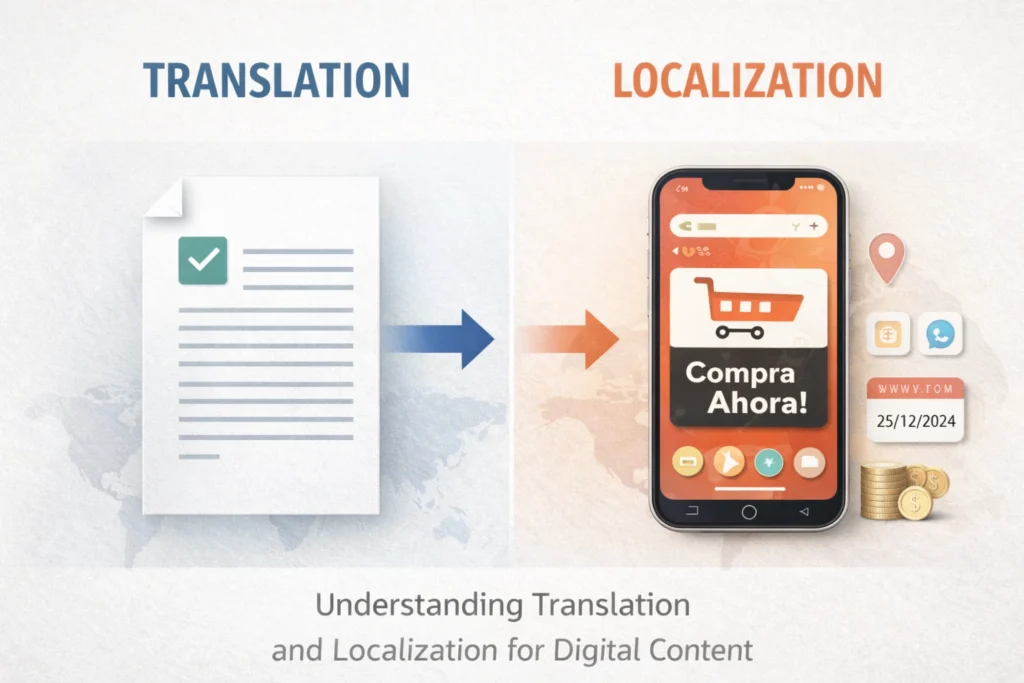
Localization, on the other hand, goes far beyond language translation. It involves adapting content to meet the cultural, social, technical, and emotional expectations of a specific region. While translation answers “What does this text mean?” localization answers “How will this audience best understand and engage with this content?”
Localization Adapts:
- Tone, style, and cultural references
- Colours, graphics, visuals, and icons
- Slang, humour, and idiomatic expressions
- Date, time, currency, and measurement formats
- User interface elements
- SEO keywords based on local search behaviour
Localization ensures the content feels native, not merely translated. This is especially important for digital content where user experience and engagement matter.
Perfect Applications for Localization Include:
- Website translation and restructuring
- Mobile app UI adaptation
- E-commerce listings and product descriptions
- Social media content and captions
- International marketing campaigns
- Video subtitles and multimedia content
At Tranzlatex, we help brands localize websites and social media content to match the tone, trends, and expectations of each market. Whether you’re targeting European customers or Asian audiences, your brand message must feel culturally aligned.
Translation vs Localization: What’s the Real Difference?
While both processes support multilingual communication, their goals are distinct. Here’s a clear comparison:
| Aspect | Translation | Localization |
|---|---|---|
| Goal | Accuracy | Cultural & market relevance |
| Focus | Language | Culture + User Experience |
| Changes | Words only | Words, tone, visuals, UI, formats |
| Best For | Documents, legal text | Websites, apps, marketing, social media |
| Outcome | Correct meaning | Emotional connection & engagement |
In simple terms:
Translation tells the message correctly.
Localization makes the message feel like it was created for the reader.
Why Digital Brands Need Both Translation and Localization
In digital environments, both translation and localization play crucial roles. For example:
1. Websites
A website translated word-for-word may convey information but fail to engage users. Localizing the website ensures that all buttons, menu items, images, layouts, and content resonate with local users. At Tranzlatex, our website translation and localization services help businesses create seamless multilingual online experiences.
2. Social Media
Social media thrives on relatability. A local joke, trending phrase, or cultural nuance can transform engagement rates. With our social media translation and localization, we adapt content to match local trends, hashtags, humor, and user expectations.
3. Marketing & Advertising
Promotional messages must appeal emotionally. Localization ensures your message fits the audience’s culture, values, and buying behaviour.
4. E-commerce Platforms
Localization simplifies the buying journey—currency, date format, address format, and product descriptions must feel natural to local shoppers.
How Tranzlatex Helps Brands Succeed Globally
As a dedicated Translation Agency, Tranzlatex takes a modern, business-friendly approach. Whether you need certified translations for legal use or complete digital localization for your website and social platforms, we deliver:
- NAATI-certified translations
- Website and social media translation
- marketing content localization
- Multilingual SEO support
- Fast, reliable, and professional service
We ensure your global audience receives content that is accurate, culturally relevant, and ready for digital success.
Final Thoughts
In the world of global business, knowing the difference between translation and localization is more than a technical detail—it’s a competitive advantage. Translation helps you communicate accurately, while localization helps you connect meaningfully.
By choosing a professional partner like Tranzlatex, you ensure your digital presence is not just multilingual, but truly global. Whether you’re expanding into new markets or strengthening your current digital strategy, combining translation and localization will make your brand more relatable, trustworthy, and successful.
How Multilingual Communication Improves Customer Trust and Business Growth? Read More Blogs on Medium.