
Step-by-Step Guide to NAATI Birth Certificate Translation for Australia Immigration
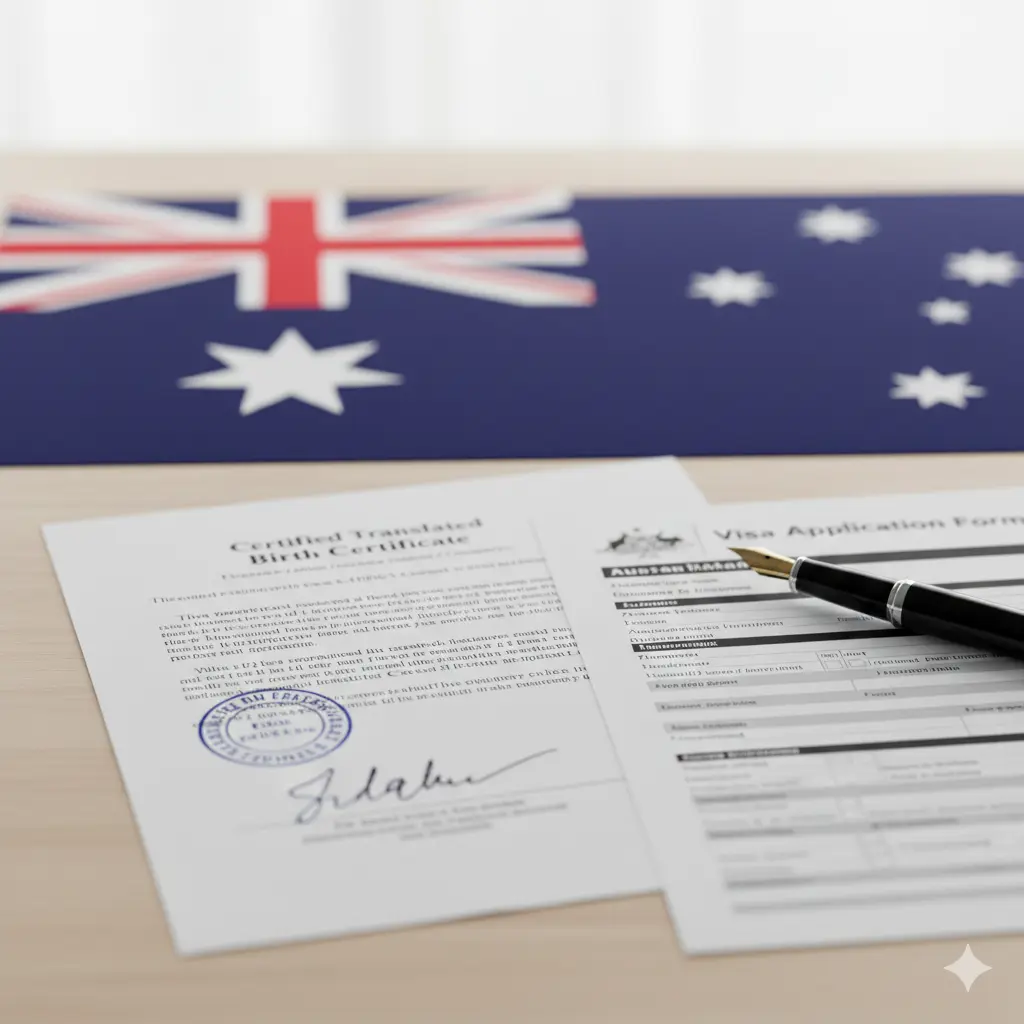
Applying for an Australian visa involves strict documentation requirements, and one of the most commonly requested documents is your birth certificate. If your certificate is not in English, you must submit a NAATI Birth Certificate Translation that meets immigration standards. Many applicants face delays or rejection simply because their translation was not done according to official rules. This guide walks you through the entire process, from preparing your document to submitting the correct translation, so your application proceeds smoothly without unnecessary complications. Why Australia Requires a NAATI Birth Certificate Translation Australian immigration authorities only accept translations completed by certified translators. The translation must be accurate, verifiable, and legally valid. A simple translated copy created by a bilingual friend or local notary will not be accepted because the government must be able to trace the translator’s credentials. A NAATI Birth Certificate Translation ensures the document has been translated by a professional recognized by the National Accreditation Authority for Translators and Interpreters. This certification confirms the translator has passed standardized language proficiency and legal translation assessments. As a result, the translation becomes legally acceptable for visa processing, university admission, PR applications, and partner visas. Without this certification, immigration officers cannot confirm authenticity, and the document is treated as incomplete. Step 1: Check Your Birth Certificate Quality Before translation begins, your birth certificate must be clear and readable. Every detail must be visible, including seals, signatures, stamps, and registration numbers. If the document is damaged, faded, or partially cut, the translation may be rejected even if the translator is certified. Scan the certificate in high resolution. Avoid mobile camera images taken at angles because distortion can make official seals unreadable. A clean scan ensures the translator can accurately reproduce all elements in the English version. Step 2: Confirm Language Requirements For a NAATI Birth Certificate Translation Not all birth certificates require translation. If your certificate is already fully in English, you do not need a NAATI Birth Certificate Translation. However, many certificates contain mixed languages where headings are in English but entries are in another language. In this situation, translation is still mandatory because immigration officers must understand every field, including names, dates, locations, and registrar notes. You should carefully verify whether any handwritten or stamped information appears in a regional language, as this is a common reason applications are delayed. Step 3: Submit the Document to Tranzlatex Once your document is ready, the next stage is sending it to Tranzlatex for a NAATI Birth Certificate Translation. You simply upload a clear scan of your birth certificate through their submission channel or share it via email or WhatsApp as instructed. After receiving the file, their team reviews the document to confirm readability, language, and certification requirements for Australian immigration. A NAATI-certified translator is then assigned to your case. The translator carefully studies the certificate and converts every visible element into English exactly as written, including stamps, seals, handwritten notes, and registry entries. Nothing is interpreted or simplified because immigration authorities require a precise legal reproduction of the original record. During translation, date formats, administrative terminology, and registration references are standardized to match Australian immigration expectations while preserving the original meaning. Once completed, the translation proceeds to certification, ensuring it will be accepted for visa processing. Step 4: Certification and Translator Declaration After translation, the translator adds a certification statement. This is the most important component of a NAATI Birth Certificate Translation. The declaration includes the translator’s name, NAATI ID, signature, date of translation, and official stamp. This section proves authenticity. Immigration officers use it to verify that the translation was completed by an accredited professional. Without this declaration, the document is treated as an unofficial translation regardless of accuracy. The translated file is usually delivered as a certified PDF, ensuring the formatting cannot be altered after issuance. Step 5: Cross-Check the NAATI Birth Certificate Translation Before submission, carefully compare your original birth certificate and translated version. Every detail must match your passport exactly. Small inconsistencies in spelling or date format can trigger verification checks. Pay special attention to parent names and place of birth. If your passport uses a slightly different spelling than the certificate, immigration authorities may request additional statutory declarations. Identifying such differences early helps avoid delays. Step 6: Uploading to Your Visa Application When submitting your visa application, upload both the original document and the NAATI Birth Certificate Translation together. The immigration system expects the source document and translation to be paired. Uploading only the translated version is considered incomplete documentation. The files should be clear, properly oriented, and combined if the portal requires a single upload. Label the document logically so officers can identify it instantly during assessment. Step 7: Responding to Verification Requests Sometimes immigration officers request confirmation or additional documents. If your translation is NAATI certified, verification usually takes less time because the translator’s credentials are already recognized. In rare cases, you may be asked to provide a new scan if the original certificate quality is unclear. This does not mean the translation is invalid; it only means the source document needs better visibility. Common Mistakes That Cause Rejection Applicants often believe notarization replaces certification, but notarization only confirms a copy is genuine, not that the translation is accurate. Another frequent issue is submitting translations from agencies that are not NAATI accredited. Even professional translators outside Australia are not accepted unless certified under NAATI standards. Using an outdated translation after changing your passport name can also create mismatches that trigger document verification. Final Thoughts Preparing documents for immigration can feel overwhelming, but following a clear process removes most risks. A proper NAATI Birth Certificate Translation ensures your application meets Australian legal standards and avoids unnecessary processing delays. By scanning the document clearly, choosing a certified translator, verifying details carefully, and uploading both original and translated versions together, you significantly improve approval chances. When done correctly, this single document becomes one of the easiest parts of your visa application rather than the reason it stalls. Read: Why
Conquer Visa For Migration Delays and Begin Your New Chapter

Applying for a Visa For Migration can be both exciting and overwhelming. It’s the bridge between your dreams and a brand-new life. Yet, many applicants experience unexpected delays that can cause stress and uncertainty.Fortunately, most of these issues can be avoided with a little preparation. By understanding what causes delays and how to prevent them, you can make your visa journey smoother and faster. 1. Missing or Incomplete Documents in Your Visa For Migration Application Missing or incomplete paperwork is one of the most common reasons for visa delays. Even one missing signature, unclear scan, or incomplete form can pause the entire process.Because immigration officers must review every document carefully, missing pages or unclear details force them to contact you for clarification — which adds days or even weeks. How to avoid it:First, double-check your checklist before you submit anything. In addition, make sure every document is clear, signed, and up to date. If your papers are not in English, have them translated by a NAATI-certified translator.Finally, review your entire package one more time before submission. A few extra minutes of checking can save you weeks of waiting. 2. Incorrect or Inconsistent Information Even a simple spelling mistake or incorrect birthdate can trigger an automatic hold. Since modern systems cross-verify your data, inconsistencies can immediately delay processing. How to avoid it:Before submitting, review your application line by line. Then, compare it with your passport and identification documents to ensure everything matches.If you spot an error later, contact the immigration office immediately. Quick communication often prevents longer delays. 3. Delays in Background or Security Checks Every country conducts background and security checks. These are essential, yet they can sometimes take longer than expected — especially when multiple agencies are involved. How to avoid it:To begin with, submit your Visa For Migration early. Moreover, secure your police clearance certificates ahead of time and ensure they’re recent.In addition, keep your contact information updated. If officials can’t reach you for clarification, your application may remain pending. Therefore, respond promptly to all emails or phone calls. 4. Using Untranslated or Poorly Translated Documents Submitting documents in the wrong language can delay your application significantly. Immigration officers cannot process documents they cannot read or verify. How to avoid it:Always use professional translation services, especially for legal or personal records. A Visa For Migration requires complete accuracy.Furthermore, professional translators understand how to format and certify documents according to immigration standards. This not only builds credibility but also speeds up approval. 5. Health and Character Requirements Not Met Many countries require health and character checks. However, delays often occur when applicants forget to schedule medical exams or provide outdated certificates. How to avoid it:Book your medical examination as soon as possible — ideally right after applying. In addition, only use clinics approved by immigration authorities.Once you receive the results, upload them immediately to the official system. Early submission means faster verification and less waiting time. 6. Changes in Visa for Migration Policy or High Application Volumes Sometimes, delays happen because of reasons beyond your control. For instance, policy updates, public holidays, or seasonal surges can all slow down processing. How to avoid it:Stay informed by visiting the immigration department’s website regularly. Also, consider applying during quieter months when fewer people submit applications.Moreover, make sure your file is complete and well-organized. A perfect application is reviewed faster, even when systems are overloaded. 7. Payment Issues or Incorrect Fees Your visa will not move forward until your payment is confirmed. Unfortunately, failed transactions or incorrect amounts are common reasons for unnecessary delays. How to avoid it:Always pay using approved methods. Additionally, save a copy of your payment receipt and confirmation number.If a transaction fails, reach out to the visa office right away. By resolving the issue early, you avoid being pushed to the end of the queue. 8. Slow or Missed Communication With the Visa For Migration Office Visa officers sometimes need extra documents or clarification. However, when applicants don’t respond quickly, their files remain inactive for long periods. How to avoid it:Check your email frequently, including your spam folder. Also, reply politely and promptly to any requests.Consistent and respectful communication keeps your Visa For Migration active and shows that you are serious about your application. How to Speed Up the Process Overall If your visa category allows, consider using a priority or fast-track option. Even though it may cost more, it can save weeks of waiting.Additionally, attend your biometrics appointment on time and confirm all your submissions through your online account. For extra assurance, consider working with professionals. At Tranzlatex, our certified translators and project managers help applicants prepare accurate, compliant, and high-quality documents. As a result, you can avoid the most common reasons for visa delays. Final Thoughts Waiting for visa approval can be stressful, but most delays are preventable. With careful preparation, accurate information, and timely responses, your application can move faster and smoother. In short, treat your Visa For Migration as more than just a formality — it’s a milestone in your journey.When you combine attention to detail with professional guidance, you not only avoid delays but also start your next chapter with confidence and peace of mind.
The Role of NAATI in Australian Migration, Legal, and Academic Sectors

One of Australia’s significant advantages is its lively and multicultural landscape. To foster a prosperous multicultural society, accurate communication is essential for all individuals speaking different languages, and Tranzlatex provides just that. In the middle of this is NAATI in Australia, the National Accreditation Authority for Translators and Interpreters does much more than translate. This supports Australia’s migration, legal, and education sectors. NAATI in Australia: Understanding the Gatekeeper of Language Standards At first, NAATI sets the national standards and accreditation for translators and interpreters in Australia. NAATI is not a language school. This is an independent authority that sets the standard for ethical and competent language services. They also set the standards through rigorous and effective certification. Thus helping you better serve the public with confidence and accuracy. They are the gatekeepers, determining that when it matters most for the communication to be accurate, a professional who is qualified to do the job is completing the task. NAATI Credentials for Migration and Visas For many people seeking to migrate, NAATI represents valuable points. The migration system in Australia awards for recognised qualifications in a community language. Also, their benefit of NAATI in Australia could be the key distinguishing factor in whether you receive an invitation to apply for a visa or not. Basically, with some professional migration submissions, there may be a requirement for certified translations of personal and professional documents. They must be performed by a NAATI certified professional to be accepted by the Department of Home Affairs. The Critical Role of NAATI in the Legal Sector The legal system relies on accurate interpretation. NAATI-accredited interpreters are commonly used in police interviews, court hearings, meetings with lawyers, and mediation sessions, among others. A poorly translated word or a misinterpreted word can completely change the outcome of a case, putting the individual’s rights and fairness at stake. NAATI certification, especially the higher-level accreditation, ensures that interpreters have an in-depth understanding of potentially complex terminology. Also, have a strict expectation of impartiality and confidentiality. NAATI’s Role in Government and Community Services The demand for NAATI in Australia spans all interactions with government and community services. Visiting a doctor and explaining symptoms of sickness, accessing help, or settling into a maternal health clinic. The primary factor for the best health, safety, and well-being is accurate communication, particularly when participating in health and social services. NAATI-certified practitioners fill this gap by ensuring all residents can access all their entitlements and rights. NAATI in Australia’s Academic Sector Australia’s premium education sector sees hundreds of thousands of international students each year. NAATI has an important role in this scenario. For instance, when an international student makes an application to a diploma/relevant university where they have studied. Another key factor is that educational institutions use interpreters more when dealing with international students and their families. For example, during administrative meetings, orientations, and other non-educational meetings regarding students’ well-being. In such cases, the interpreter ensures information is made clear to the benefit of the student and family. NAATI in Australia: Choosing the Right Credential vs. Certification It is important to be aware of the differences between NAATI’s credentials. The NAATI test is mostly a points test intended for migrants. It tests some basic conversational skills in two languages, but does not allow one to work as a professional translator or interpreter. NAATI Certification is a professional qualification. It includes a far more rigorous assessment of skills, ethics, and cultural knowledge. One must be employable within the language services industry in Australia. How NAATI Upholds Australia’s Multicultural Identity NAATI’s role is critical to Australia as a successful multicultural country. This is more than a body that tests. It is a vital institution that supports and maintains social cohesion and promotes individuals’ rights. Thus, ensuring that all citizens and residents can participate fully in Australian society, irrespective of their language background. After all, NAATI builds confidence between communities and the services that are essential to their lives. Top Reasons to Choose NAATI in Australia Tranzlatex uses NAATI credentials or services is the best option for quality and assurance. Here’s why: Final Words Overall, NAATI in Australia is referenced when describing Australian society, but its engagement is highly visible. NAATI certification provided by Tranzlatex is connected to migration, social justice, legal justice, education, and health access. More importantly, it is a quality assurance that ensures language is a bridge, not a barrier. If you want to know about the best Online Translation Services for Immigration and Visa Documents, check the blog on Medium.
How to Verify a NAATI Certified Translation? A Step-by-Step Guide
When any legal entity in Australia issues a request for an official translation, it almost always includes one clear directive: that it is NAATI certified. They are requesting it to maintain a professional standard. Now, given how important this NAATI certified translation can be for any legal work in Australia, you must know that it is genuine. All things considered, this guide will take you through the steps needed to verify. What Does “NAATI Certified Translation” Actually Mean? Firstly, NAATI means the National Accreditation Authority for Translators and Interpreters. This is the Australian governing body that sets and maintains the national standards for translators and interpreters, and Tranzlatex follows their standard. After all, NAATI certification only refers to the individual translator, not the company. Step 1: Locate the NAATI Certification Stamp and Statement Every single NAATI certified translation will have an official standardized stamp either on the last page or on a separate cover page. Do not accept a translation without this. Therefore, at the time you receive the document(s), make sure they have: Step 2: Cross-Check with the NAATI Online Directory The stamp is the first step, but it can be easily counterfeited. NAATI’s public, searchable online directory includes all currently certified practitioners. If they match, your translation is verified. If not, there is a message saying “no results found,” which is a major red flag. Red Flags: Signs of a Non-Certified or Fraudulent Translation Also, be careful if you see any of these warning signs: A company stamp is used without the named credential of an individual NAATI certified translator. What to Do If You Suspect a Fake NAATI Certified Translation? If your NAATI certified translation checks came back negative, remember not to send the document. Because authorities are extremely resourceful and can easily discover fakes, this can result in the non-acceptance of an application. Why NAATI certified translation? Using a NAATI certified translation is a way to ensure integrity, accuracy, and reliability because those translations are performed by professionals. They have the necessary qualifications and are bound by a code of ethics. Also, they handle the legal and formal obligations for official documents. If you want to find out about the latest pricing and know about quality and speed, you must read the blog on NAATI Certified Translation Fees in 2025. Ready for translations Did you know Tranzlatex offers the most affordable rates for NAATI-certified translations? Further, using the verification guide you’ve just gone through, you’ll know that you have confirmed your documents and can safely send your official applications. Visit our website to learn more about our services.
2025 NAATI Translation Fees: Quality, Speed & Cost Explained

Prices of NAATI-certified translations in 2025 Everyone looks for the gold standard translation. Sounds right, doesn’t it? Of course, it is. NAATI-certified translations in Sydney are such an example. Whether for immigration or legal purposes, everyone needs a translation service. Getting recognised in Australia is the main goal, and our translation service is just what you need. Now, coming back to the point of cost. This is why you are reading this blog, right? A static price is not an option as we only provide you with dynamic pricing. Market value is what we take into consideration and make sure you get the best price. What is NAATI Certification and Why Does it Matter for Pricing? NAATI or “National Accreditation Authority for Translators and Interpreters” is an organisation responsible for setting translation standards. Ranging from quality to accuracy, they make sure every translation is delivered for its intended purpose. At Tranzlatex, we provide you with NAATI-certified translations in Australia while maintaining all NAATI standards. Till now, you have understood the importance of NAATI translation. You now must know why it matters for pricing. At first, this specialised translation requires expert translators. Secondly, document complexity is an essential factor. Thirdly, how urgently do you require these documents? And finally, if you require any formatting. We consider all these before deciding on the final pricing. Key Factors Influencing NAATI Translation Costs As we have already mentioned, there are certain factors influencing NAATI translation. Below are the factors determining price: Document Type and Complexity Firstly, you must understand that there are two types of documents. Standard and Complex documents. For example, documents like birth and marriage certificates are simple to translate. Legal and technical documents are harder. As you can understand, complex documents take more time to translate. Finally, there is the number of pages and word count that affect pricing. Language Pair Language rarity is also a major factor; the more rarity the higher the price. For example, there are many translators available for a single language. While for others, availability is often rare. In case of common availability, we charge you less; for rare availability, you may have to pay extra. Urgency/Turnaround Time Now, you may require files on an urgent basis. For regular service, we charge standard fees. You will get your file in 2-3 days for a single-page standard document. In a complex scenario, this might take more time. If you require your file on an urgent basis, we charge extra for that. After all, our effort has a price, and we do not compromise on quality. Translator’s Experience and Reputation As always, we use professional translators to ensure high-quality output. They are expensive to come by. This increases for rare language translators who are difficult to get. Due to all these reasons, we may charge extra depending on the situation. Additional Services Finally, we go the extra mile to give you the best results. For example, if you require hard copies, we will deliver documents to your physical location. In case you require any customised formatting, our translators are also here for you. Estimated Cost Ranges for Common NAATI Certified Translations in 2025 Translation cost varies from document to document. The market cost for basic NAATI-certified translations in Melbourne is around 69 AUD. However, this always fluctuates based on market conditions. We deliver with translation service at around 49 AUD to 59 AUD. Affordable solutions are what we strive for to give you the best. How to Get an Accurate Quote If you wish to get a quote for your translation service, we are always available for you. You need to provide relevant information for this. Our team considers the cost, deadline, and scope of each translation work. Tips for Saving Money on NAATI Translations Now, you must consider saving money, and Tranzlatex is here to suggest many ways to do that. First of all, you must plan properly to avoid any extra fees. Your documents must be prepared. We recommend the NAATI standard to ensure the best results. This specialised translation not only helps in Australia but also the whole world. Conclusion Overall, cost is essential if you are looking for a professional translation service. Key factors like market price are essential for influencing translation costs. We provide you with affordable NAATI-certified translations in Perth to help you in your ordeal.