Step-by-Step Guide to NAATI Birth Certificate Translation for Australia Immigration

Applying for an Australian visa involves strict documentation requirements, and one of the most commonly requested documents is your birth certificate. If your certificate is not in English, you must submit a NAATI Birth Certificate Translation that meets immigration standards. Many applicants face delays or rejection simply because their translation was not done according to official rules. This guide walks you through the entire process, from preparing your document to submitting the correct translation, so your application proceeds smoothly without unnecessary complications. Why Australia Requires a NAATI Birth Certificate Translation Australian immigration authorities only accept translations completed by certified translators. The translation must be accurate, verifiable, and legally valid. A simple translated copy created by a bilingual friend or local notary will not be accepted because the government must be able to trace the translator’s credentials. A NAATI Birth Certificate Translation ensures the document has been translated by a professional recognized by the National Accreditation Authority for Translators and Interpreters. This certification confirms the translator has passed standardized language proficiency and legal translation assessments. As a result, the translation becomes legally acceptable for visa processing, university admission, PR applications, and partner visas. Without this certification, immigration officers cannot confirm authenticity, and the document is treated as incomplete. Step 1: Check Your Birth Certificate Quality Before translation begins, your birth certificate must be clear and readable. Every detail must be visible, including seals, signatures, stamps, and registration numbers. If the document is damaged, faded, or partially cut, the translation may be rejected even if the translator is certified. Scan the certificate in high resolution. Avoid mobile camera images taken at angles because distortion can make official seals unreadable. A clean scan ensures the translator can accurately reproduce all elements in the English version. Step 2: Confirm Language Requirements For a NAATI Birth Certificate Translation Not all birth certificates require translation. If your certificate is already fully in English, you do not need a NAATI Birth Certificate Translation. However, many certificates contain mixed languages where headings are in English but entries are in another language. In this situation, translation is still mandatory because immigration officers must understand every field, including names, dates, locations, and registrar notes. You should carefully verify whether any handwritten or stamped information appears in a regional language, as this is a common reason applications are delayed. Step 3: Submit the Document to Tranzlatex Once your document is ready, the next stage is sending it to Tranzlatex for a NAATI Birth Certificate Translation. You simply upload a clear scan of your birth certificate through their submission channel or share it via email or WhatsApp as instructed. After receiving the file, their team reviews the document to confirm readability, language, and certification requirements for Australian immigration. A NAATI-certified translator is then assigned to your case. The translator carefully studies the certificate and converts every visible element into English exactly as written, including stamps, seals, handwritten notes, and registry entries. Nothing is interpreted or simplified because immigration authorities require a precise legal reproduction of the original record. During translation, date formats, administrative terminology, and registration references are standardized to match Australian immigration expectations while preserving the original meaning. Once completed, the translation proceeds to certification, ensuring it will be accepted for visa processing. Step 4: Certification and Translator Declaration After translation, the translator adds a certification statement. This is the most important component of a NAATI Birth Certificate Translation. The declaration includes the translator’s name, NAATI ID, signature, date of translation, and official stamp. This section proves authenticity. Immigration officers use it to verify that the translation was completed by an accredited professional. Without this declaration, the document is treated as an unofficial translation regardless of accuracy. The translated file is usually delivered as a certified PDF, ensuring the formatting cannot be altered after issuance. Step 5: Cross-Check the NAATI Birth Certificate Translation Before submission, carefully compare your original birth certificate and translated version. Every detail must match your passport exactly. Small inconsistencies in spelling or date format can trigger verification checks. Pay special attention to parent names and place of birth. If your passport uses a slightly different spelling than the certificate, immigration authorities may request additional statutory declarations. Identifying such differences early helps avoid delays. Step 6: Uploading to Your Visa Application When submitting your visa application, upload both the original document and the NAATI Birth Certificate Translation together. The immigration system expects the source document and translation to be paired. Uploading only the translated version is considered incomplete documentation. The files should be clear, properly oriented, and combined if the portal requires a single upload. Label the document logically so officers can identify it instantly during assessment. Step 7: Responding to Verification Requests Sometimes immigration officers request confirmation or additional documents. If your translation is NAATI certified, verification usually takes less time because the translator’s credentials are already recognized. In rare cases, you may be asked to provide a new scan if the original certificate quality is unclear. This does not mean the translation is invalid; it only means the source document needs better visibility. Common Mistakes That Cause Rejection Applicants often believe notarization replaces certification, but notarization only confirms a copy is genuine, not that the translation is accurate. Another frequent issue is submitting translations from agencies that are not NAATI accredited. Even professional translators outside Australia are not accepted unless certified under NAATI standards. Using an outdated translation after changing your passport name can also create mismatches that trigger document verification. Final Thoughts Preparing documents for immigration can feel overwhelming, but following a clear process removes most risks. A proper NAATI Birth Certificate Translation ensures your application meets Australian legal standards and avoids unnecessary processing delays. By scanning the document clearly, choosing a certified translator, verifying details carefully, and uploading both original and translated versions together, you significantly improve approval chances. When done correctly, this single document becomes one of the easiest parts of your visa application rather than the reason it stalls. Read: Why
How to increase the reach of your videos with Media & Entertainment Transcription
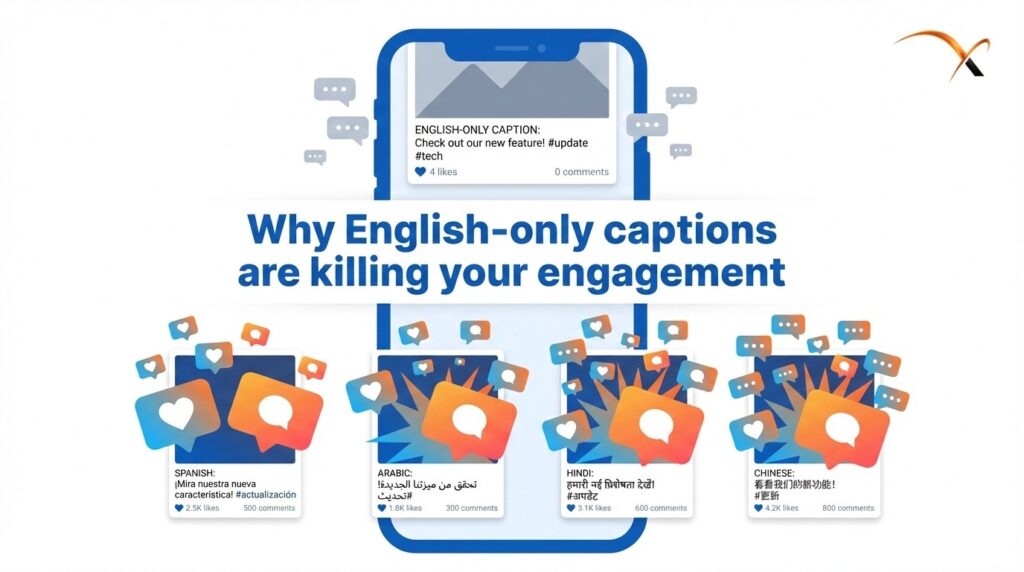
And how Media & Entertainment Transcription helps you reach the audience you already have The Global Audience Myth: “Everyone Understands English” For years, brands believed English was the universal language of the internet. While English remains widely used online, social media behavior has changed dramatically. Platforms are no longer local communities — they are international viewing spaces where people consume content from different countries every minute. Viewers don’t just want to recognize a language. They want to effortlessly understand it. When your video uses English-only captions, a large portion of viewers silently struggles to follow along. They may understand parts of it, but not enough to react, comment, or stay until the end. The algorithm interprets that hesitation as lack of interest. Your content quality didn’t fail.Your accessibility did. This is exactly where Media & Entertainment Transcription becomes essential — not as an accessibility feature, but as an engagement strategy. Social Media Is Now a Silent-First Experience Most videos today are consumed in environments where sound is inconvenient: public transport, offices, classrooms, waiting rooms, or late-night scrolling. Users watch without audio and rely entirely on text. Captions are no longer optional support text.They are the primary communication layer. If a viewer reads quickly and comfortably, they stay.If they struggle to interpret meaning, they leave. English captions often require translation in the viewer’s mind. That extra mental effort increases cognitive load. Social media users avoid cognitive effort; they scroll instead. Through accurate Media & Entertainment Transcription, captions become readable rather than decodable. The viewer no longer translates — they absorb. Engagement Is Driven by Comprehension, Not Exposure Many businesses misread analytics. A post may get impressions globally but engagement remains low. The reason is simple: visibility does not equal understanding. When captions match the viewer’s language, three things happen naturally: Algorithms interpret these behaviours as quality signals. Without proper Media & Entertainment Transcription, your content reaches audiences but never communicates with them. Social media platforms reward communication, not broadcasting. Partial Understanding Creates Passive Viewers A viewer who understands only 70% of your message behaves very differently from one who understands 100%. They rarely: They watch briefly, then move on. This silent audience is often the largest segment of international reach. English-only captions unintentionally turn potential customers into passive viewers. Professional Media & Entertainment Transcription removes that hesitation and converts viewers into participants. Algorithms Measure Retention, Not Language Platforms do not detect whether your grammar is correct or whether your vocabulary is impressive. They measure behaviour. Retention curve, completion rate, replay frequency and interaction speed decide reach. Localized captions produced through Media & Entertainment Transcription directly affect these signals because viewers stay longer when comprehension is immediate. Even a small increase in retention dramatically expands organic distribution. In many cases, engagement problems are misdiagnosed as marketing issues when they are actually comprehension issues. Cultural Context Matters More Than Translation Literal translation alone is not enough. Social media language relies heavily on tone, humour, and familiarity. English phrases often carry cultural assumptions that do not translate automatically. A caption may be grammatically correct yet emotionally distant. Professional Media & Entertainment Transcription adapts phrasing to natural speech patterns. Instead of reading like subtitles from a documentary, captions feel like a native conversation. This subtle shift changes how audiences perceive authenticity. People interact with content that feels local, even when the brand is global. Accessibility Expands Market Reach Automatically Captions initially became popular for accessibility reasons, but today accessibility and marketing overlap. The more people who can comfortably consume your content, the more markets you enter without additional advertising cost. Accurate Media & Entertainment Transcription helps content function across: Instead of creating new campaigns for each audience, the same content becomes understandable everywhere. From Content Creation to Content Communication Many brands invest heavily in visuals, editing, and storytelling yet overlook the final step — making the story understandable to everyone who sees it. English-only captions assume familiarity.Localized transcription ensures clarity. Once captions align with audience language, content performance often changes without any modification to the video itself. Reach grows because comprehension grows. Media & Entertainment Transcription does not change your message.It allows the message to arrive intact. The Real Reason Engagement Drops Low engagement rarely means viewers dislike your content. More often, they never fully receive it. A viewer who pauses to mentally translate loses emotional momentum. Emotional momentum is what produces reactions and shares. Remove that pause and behaviour changes immediately. English-only captions introduce friction.Multilingual transcription removes friction. Conclusion: Engagement Begins With Understanding Social media rewards clarity, familiarity, and comfort. Audiences interact with content they instantly understand, not content they must interpret. English alone no longer represents the internet’s audience. It represents only a segment of it. By investing in Media & Entertainment Transcription, brands transform content from globally visible to globally understandable. When understanding improves, watch time rises. When watch time rises, algorithms respond. When algorithms respond, engagement follows. Your reach was always there.Your captions just needed to speak the audience’s language. Read Our More Blogs: Medium
Best Online Immigration Documents Translation and Visa
When you apply for a visa or immigration process, the authorities will likely require you to submit documents in the official language of the country you are entering. For this reason, you need immigration documents translation. Specialists handle this best. After all, they can easily spot typographical or grammatical errors. Choosing the appropriate translation services is most important. Thus, Tranzlatex can mean the difference between seamless translation and delays or rejection. Key Features to Look for in Visa Or Immigration Documents Translation When it comes to immigration documents translation, not all translation providers will be the same. Here are some points you should keep in mind: At Tranzlatex, we do not use any automated tools such as Google Translate for official documents. They will lack certification and are full of errors. Certified vs. Notarized Translations Many applicants get confused when it comes to certified and notarized immigration documents translation. Here’s the difference: Certified Translation Notarized Translation Best Immigration Documents Translation Choosing the right provider will depend on a few factors: Why Choose Us? Exclusive service offering from Tranzlatex: certified translations for your immigration and visa needs. Here’s what we offer: Ready for a translation service Overall, translation delays can cost you time and money in the immigration process. If you need immigration documents translation, Tranzlatex will provide a notarized document for an embassy, or professional proofreading, we are here to help. Visit our website to know more. Follow Us On Medium.
How to Choose the Best Online Translation Service for Your Business
In the current global market, business translation services are often critical to communicating with fellow international clients, partners, and customers. However, selecting the best online translation service can be difficult with numerous services available online. This buying guide will discuss the important factors to consider with Tranzlatex when reducing the search for the best provider to meet the needs of your specific business. Identify Your Business Translation Needs with the Best Online Translation Service At first, you must choose a translation service to know what you need. Then, identify the content that needs translating. Are you translating legal contracts, marketing materials, technical documents, or online content? Each type of content demands a different level of expertise. Next, establish how much content you require translated and how often. Some businesses simply require one-off translations, while others require ongoing support for large-volume projects. Don’t forget to identify what languages and dialects your target audience speaks to ensure the service can cover all of your required markets. Finally, find out what your turnaround choices are. If you require expert translations and cannot wait weeks to get your translation, inquire about the turnaround options provided by the service. If you simply require quality, then you must consider services that follow high editing processes. Evaluate Translation Accuracy and Quality Accuracy is paramount in business translations. While tools like Google Translate are lightning fast in getting texts generally translated, they often miss cultural nuances and context. To ensure quality work, you need the best online translation service that work with human translators, specifically with expertise in the specialized industry, such as legal, medical, or technical. Quality assurance is another important consideration. The best translation service will always have multiple rounds of review by native speakers. This is to ensure grammatical accuracy, cultural relevance, and industry-specific terminology. If you are looking to have translations certified for official documents, check to see that the provider has this service and is appropriately accredited. Before signing a contract, you should always ask for sample translations so that you can assess the quality of their work. Check Language Coverage and Specialization that your Best Online Translation Service offers The best online translation service should include many languages and dialects for your target markets. But even with adequate language coverage, it is still worth considering specialization. For example, a medical research paper has its own healthcare terminology that requires knowledge of specific subject matter. Likewise, marketing content requires a sense of creativity to relate to local audiences. In both cases, look for providers who have subject-matter experts in your industry so you can be assured of translation accuracy as well as cultural relevance. Another consideration is whether or not the service is offered as localization. A localization service will move beyond a literal translation, also accounting for cultural nuances and regional preferences. This is especially important for branding elements and any customer-facing materials. Compare Pricing and Service Flexibility Firstly, cost is an important consideration, but “cheap” does not always mean you’re getting as good of value. Online translation services generally charge by the word, by the page, or by project cost, so be sure to weigh the types of prices and look for the best value. Secondly, scalability is another important consideration. If your business doubles in size, can this provider help meet the extra demand without sacrificing quality? Some services offer an ongoing subscription plan, while others work on a pay-as-you-go model. Pick a model that works for your budget and workflow. Finally, be careful about hidden fees. Rush charges or editing costs can be extra costs that you don’t anticipate. Always go with a provider that has pricing you can see, along with customizable plans to fit your needs. Assess Security and Confidentiality Measures Contrarily, when sharing sensitive company information, data security is critical. After all, you will want to confirm that your translation service provider has strong security protocols in place. For example, NAATI-certified translation services follow SSL encryption for file transfer and secure cloud storage. When dealing with highly confidential documents, confirm with your translation service provider if they offer non-disclosure agreements (NDAs) and/or are compliant with industry regulations. For instance, GDPR or similar certification. Established and reputable translation services will have stringent privacy policies in the service terms and conditions to protect your client base. Read Reviews and Test Customer Support Before you decide, you will want to verify the provider’s reputation. Specifically look for factors like accuracy, turnaround time, and professionalism altogether. You should test the provider’s customer support by reaching out to them with any questions or concerns. If they are responsive and helpful, that’s an indicator of dependable service. If you can, request references or case studies for others in your industry similar to your business. Why Choose the Best Online Translation Service? When looking for a translation option, you want a trusted partner. Here’s what makes us distinctive: Ready for Translation Services Selecting the correct translation service can ultimately make or break your success on the world stage. You can select the best online translation service from Tranzlatex that can meet all of your needs by measuring accuracy, languages supported, pricing, security, and client feedback. Follow us on: Medium